
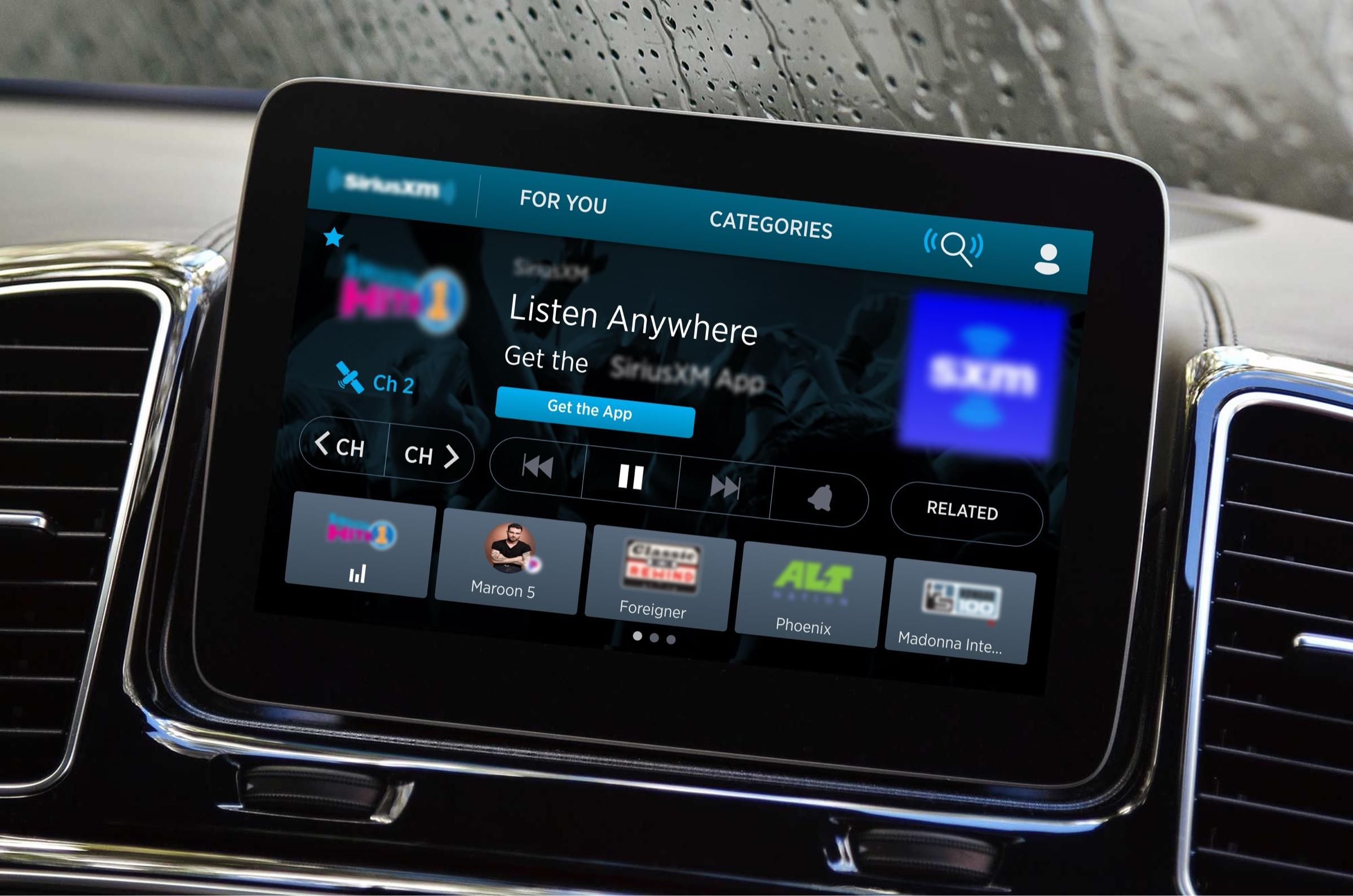
Start in the Car, Continue on the Phone
Making the vehicle display the place to discover the app, and a text message the way to continue on the phone.
Read Time: Summary 2-3 Min / Deep Dive 3-5 Min
Role
Senior UX Designer
Division
In-vehicle audio and mobile streaming
Timeline
Apr 2020 – Jul 2020
Executive Snapshot
The platform was an in-vehicle infotainment system that brought satellite radio and internet streaming together in the vehicle's audio interface.
The Challenge
Listeners could subscribe through the vehicle display, but the research summarized in the project write-up showed that listeners dropped out after starting and often did not return. Many also associated the service with the car and were unaware they could listen on their phones.
My Role
I mapped the in-vehicle experience from its blueprints, reviewed where the handoff could fit with the product manager and technical leads, and translated that review into wireframes and a prototype for the vehicle display, SMS link, and mobile sign-in.
The Decision
Make the vehicle display the place to discover the app and request a link. Use a text message to give listeners a way to continue on their phones when they have time to download the app, sign in, and start listening. The design also gave trial listeners a way to leave the car with a next step while preserving the existing subscription route for vehicles that could not support the handoff.
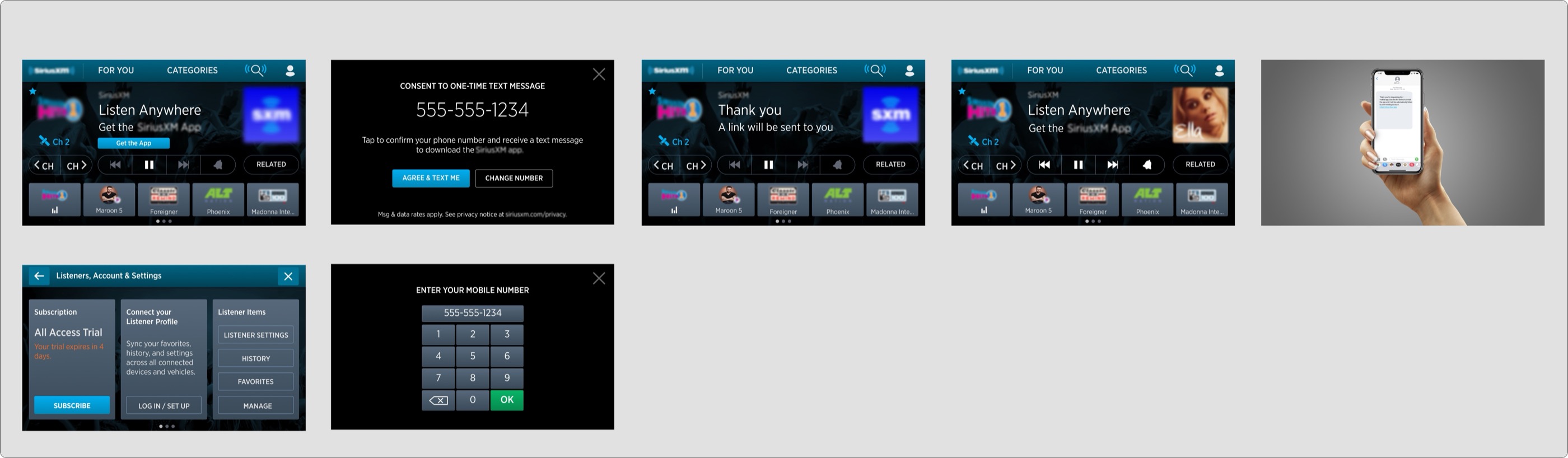
The proposed car-to-phone handoff
1. Vehicle display
Request app link
2. SMS
Open link later
3. Phone
4. Install or open app
5. Sign in and listen
Where the Work Landed
The design moved toward blueprinting and development, and a version of the app download experience later reached production in vehicle head units. To understand why we split the journey across devices, start with what the existing subscription flow asked listeners to do in the car.
Deep Dive
To go deep and learn more about my thinking, judgment, and reasoning expressed on this engagement, continue reading and dive deep.
Est. Reading: 3-5 Minutes
The Vehicle Was a Good Place to Discover the App
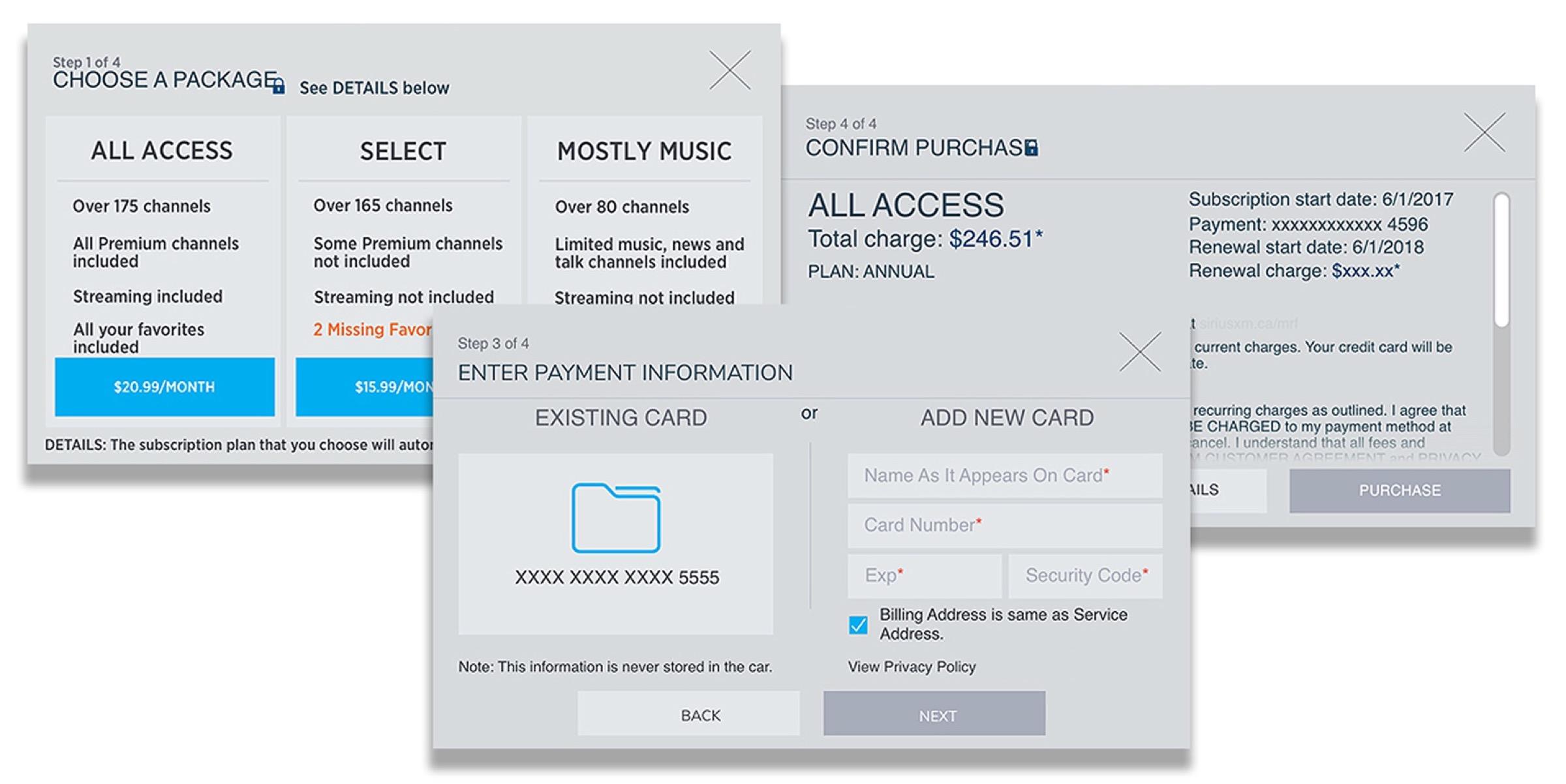
The existing in-vehicle subscription flow asked listeners to choose a package, enter or confirm payment information, and approve the purchase on the vehicle display. That made the car the place where the listener had to find the offer, make a decision, and complete the transaction. The project write-up describes what happened when listeners stopped partway through. They often did not come back to finish.
Existing experience: in-vehicle subscription screens
I Mapped Where the Handoff Could Fit
The work targeted future model years, so I used the platform blueprints to map the expected experience. Before wireframing, I walked the flow with the product manager and technical leads to check how the system worked and assess where a new entry point could fit.
That review mattered because the handoff depended on more than a button. We considered the listener's subscription status, the vehicle's capabilities, and how to let listeners continue on their phones when they were ready.
I Designed the Transition Across Three Surfaces
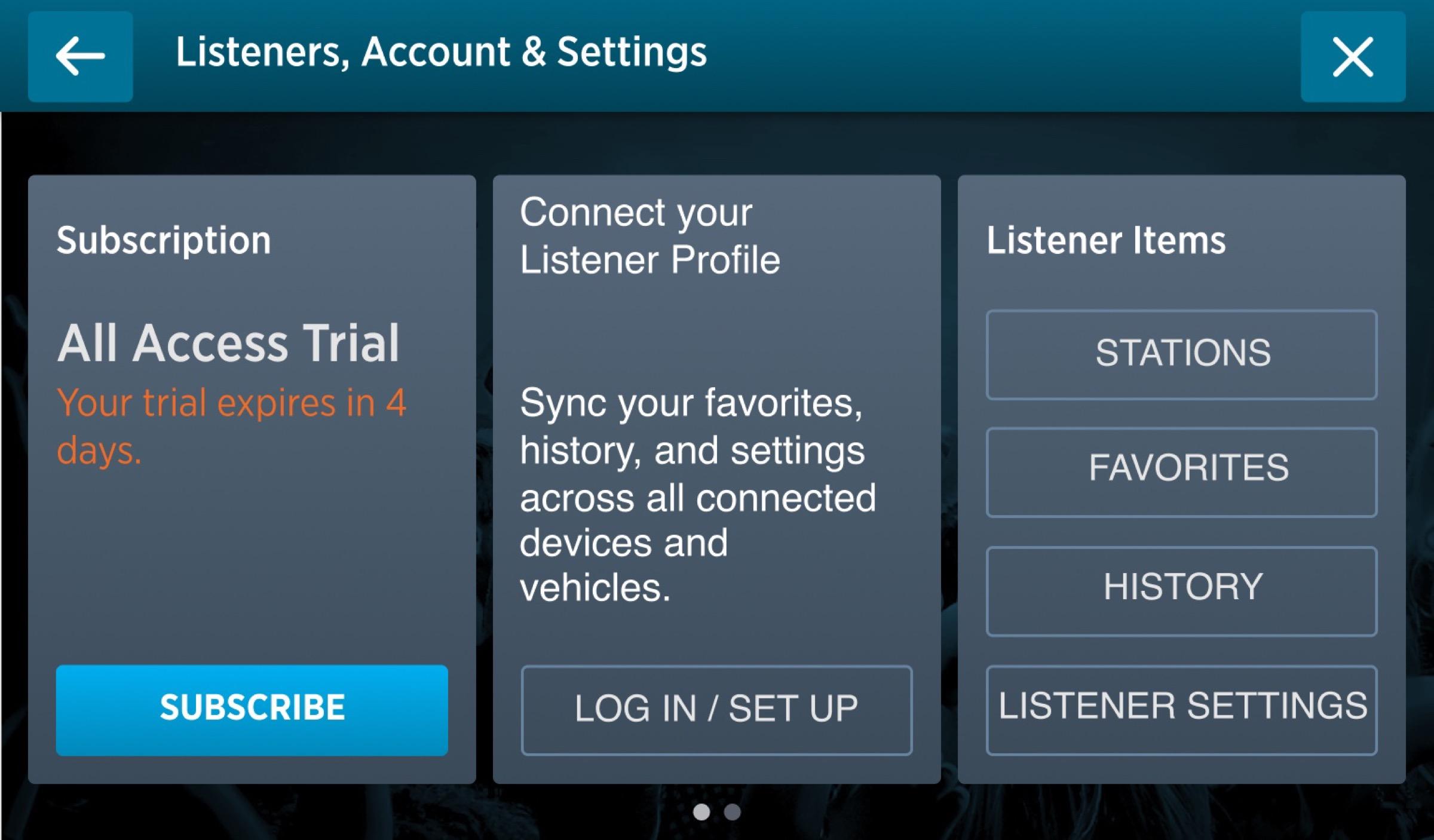
- Vehicle display. I designed Get the App as a way to start from Now Playing. The write-up also records access through profile and listener settings. The vehicle interaction focused on requesting the link and confirming where it would go.
- SMS. The one-time link carried the next step out of the car. The listener could leave the vehicle and still have a clear way to resume.
- Mobile. The link led to the app download or opened the app if it was already installed. Mobile sign-in or verification gave the listener a path to start streaming. The existing in-car subscription route served as a fallback for older vehicles or restricted head units.
App Adoption and Paid Conversion Answer Different Questions
| Proposed success measure | What it would tell us |
|---|---|
| App adoption | Did listeners who started the handoff sign in and begin listening on mobile? Link opens, installs, and sign-ins would show where they continued or dropped off before their first stream. |
| Paid conversion | Did eligible trial listeners start a paid subscription within a defined window? A comparison with similar trial listeners who did not receive the link would help evaluate the relationship between the handoff and paid conversion. |
An existing subscriber could adopt the app without making a purchase. A trial listener could start streaming on mobile and decide whether to subscribe later.
Where the Work Landed
The historical write-up places the completed UX and design work at the transition into blueprinting and development. That is the documented milestone for this case study.
Review other case studies

Platform & Ecosystem Transformation
Validating a Faster Path for Policy Testing
How mapping the policy lifecycle exposed an operating-model bottleneck and helped cut one testing cycle from about six months to two weeks.

Service & Workflow Transformation
Shifting Mobile Advice Strategy from Scheduling to Relationship Support
How challenging a desktop-first assumption shaped a phased mobile strategy and helped reduce missed advisor appointments by 35 percent.

Service & Workflow Transformation
Reframing a Mandated CRM Migration Around How Agents Actually Work
How direct agent research exposed a flaw in the platform strategy and led to a household-centered information model.