

Shifting Mobile Advice Strategy from Scheduling to Relationship Support
How challenging a desktop-first customer assumption shaped a phased mobile strategy and helped reduce missed advisor appointments by 35 percent.
Read Time: Summary 3-7 Min / Deep Dive 8-12 Min
The business initially asked for a mobile notification to address missed advisor appointments. The investigation revealed a larger problem: advised customers lacked reliable mobile access to the information and actions needed to maintain their advisor relationships.
Executive Snapshot
Initial Request
Add a mobile toast notification intended to reduce missed advisor appointments.
Challenge
Advised customers had no mobile way to see that an advisor appointment was coming up, no clear in-app reminder path, and no mobile way to reschedule. If they needed to manage an appointment, they had to move to desktop web or rely on another channel.
Strategic Insight
The issue was bigger than appointment scheduling. The organization was making product decisions through a desktop-first assumption about mature retirement and advised customers, even though customer signals showed that mobile access was already central for many of them.
Outcome
Retained project notes indicate missed advisor appointments decreased by 35% after launch. The work also expanded mobile access to appointment-related services and established a broader strategic direction for advisor relationship support.
Role
I served as UX Strategist and XD Mobile Lab Lead, responsible for strategic alignment across multiple advice-service verticals, including Personal Advice, Digital Advice, Wealth Management, and Ultra-High-Net-Worth Experiences. My scope later expanded to support transaction and money movement strategy.
What I Influenced
I helped align multiple advice-service verticals around a phased mobile direction, identify platform and roadmap dependencies, and move the work from an isolated reminder feature toward appointment visibility, rescheduling access, and broader advisor relationship support.
This retrospective was reconstructed from retained planning materials, meeting notes, screenshots, outcome summaries, and project context. Certain details have been generalized or anonymized to protect confidentiality. Proprietary system names, company identifiers, and confidential financial information have been excluded.
Strategic Signals
| Category | Signal |
|---|---|
| Problem | Mobile access friction and a desktop-first assumption about advised customers |
| Strategic Reframe | From appointment reminders to advisor relationship continuity |
| Contribution | Cross-vertical alignment, dependency mapping, phased strategy, and roadmap influence |
| Customer Change | Mobile appointment visibility and access to rescheduling |
| Measured Outcome | 35% reduction in missed advisor appointments |
| Complexity | Multiple advice verticals, product teams, platform constraints, API dependencies, and phased delivery |
From a Reminder Request to a Mobile Advice Strategy
| Dimension | Initial State | Validated Direction |
|---|---|---|
| Business framing | Reduce missed appointments through a mobile reminder. | Preserve advisor capacity by improving mobile access and relationship continuity. |
| Customer assumption | Mature advised customers primarily handled important tasks on desktop or tablet web. | Customers expected mobile to support meaningful financial and advisor-service needs. |
| Product direction | Add an appointment notification. | Build phased appointment visibility, rescheduling access, and broader meeting support. |
| Organizational approach | Advice verticals planned within separate roadmaps. | Teams aligned dependencies around a more connected mobile service direction. |
| Result | Appointment friction remained dependent on other channels. | Retained project notes indicate missed advisor appointments decreased by 35%. |
Skimmer Takeaway
The most strategic contribution was not adding appointment functionality. It was challenging the desktop-first assumption shaping mobile investment and helping multiple teams align around a phased strategy for maintaining advisor relationships wherever customers chose to engage.
Deep Dive
To go deep and learn more about my thinking, judgment, and reasoning expressed on this engagement, continue reading and dive deep.
Est. Reading: 8-12 Minutes
In This Deep Dive · 9 Sections
- 01Project Timeline & Scope
- 02Why the Mobile Access Gap Mattered
- 03The Initial Request: Add Appointment Functionality
- 04The Assumption Behind the Request
- 05What the Evidence Revealed
- 06Reframing the Problem
- 07Strategic Framework: Access → Engage → Complete
- 08Aligning the Advice Ecosystem
- 09Turning Constraints Into a Phased Strategy
Project Timeline & Scope
The work began around March 2022 with an initial request to add a mobile toast message intended to address missed advisor appointments.
The work continued through October 2023. Phase 1 launched in December 2022, Phase 2 launched in May 2023, and Phase 3 was beginning as I transitioned out of the work.
The engagement crossed multiple advice-service verticals, each operating through its own product team, roadmap, and delivery dependencies.
Why the Mobile Access Gap Mattered
Advisor appointments were not simple calendar events. They were service moments where customers received guidance, asked questions, made financial decisions, and maintained an ongoing relationship with their advisor.
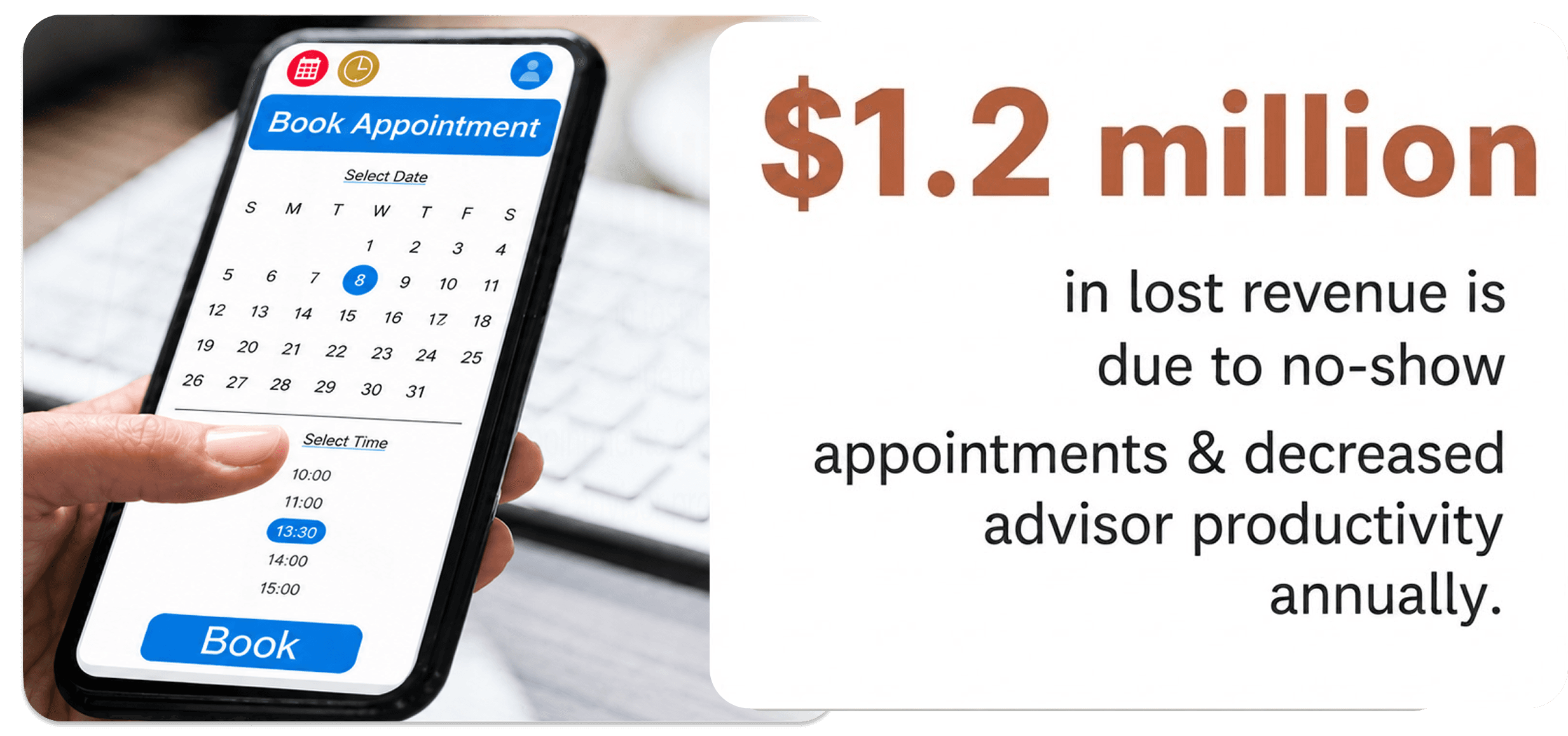
When an appointment was missed, the impact extended beyond individual inconvenience. Advisor capacity was lost, follow-up work increased, and both the customer's progress and continuity of the advisor relationship were put at risk.
The missing mobile functionality was therefore not only a calendar gap. It created a service-access gap. When customers could not see or manage an appointment through a mobile channel they regularly used, the product made it harder for them to follow through and harder for the business to preserve valuable advisor time.
The Initial Request: Add Appointment Functionality
The initial request was to add a mobile toast message intended to address missed advisor appointments. At first, the organizational conversation focused on appointment functionality.
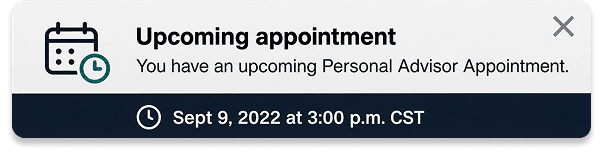
The mobile application did not give advised customers a way to see that an advisor appointment was coming up. There was no mobile appointment visibility, no clear in-app reminder path, and no mobile way to reschedule. If a customer needed to manage the appointment, they had to move to the desktop web experience or rely on another channel.
The business was seeing missed appointments, and the assumed opportunity was to add appointment-related capabilities into the mobile experience.
That was a valid need, but it was not the full strategic problem.
The Assumption Behind the Request
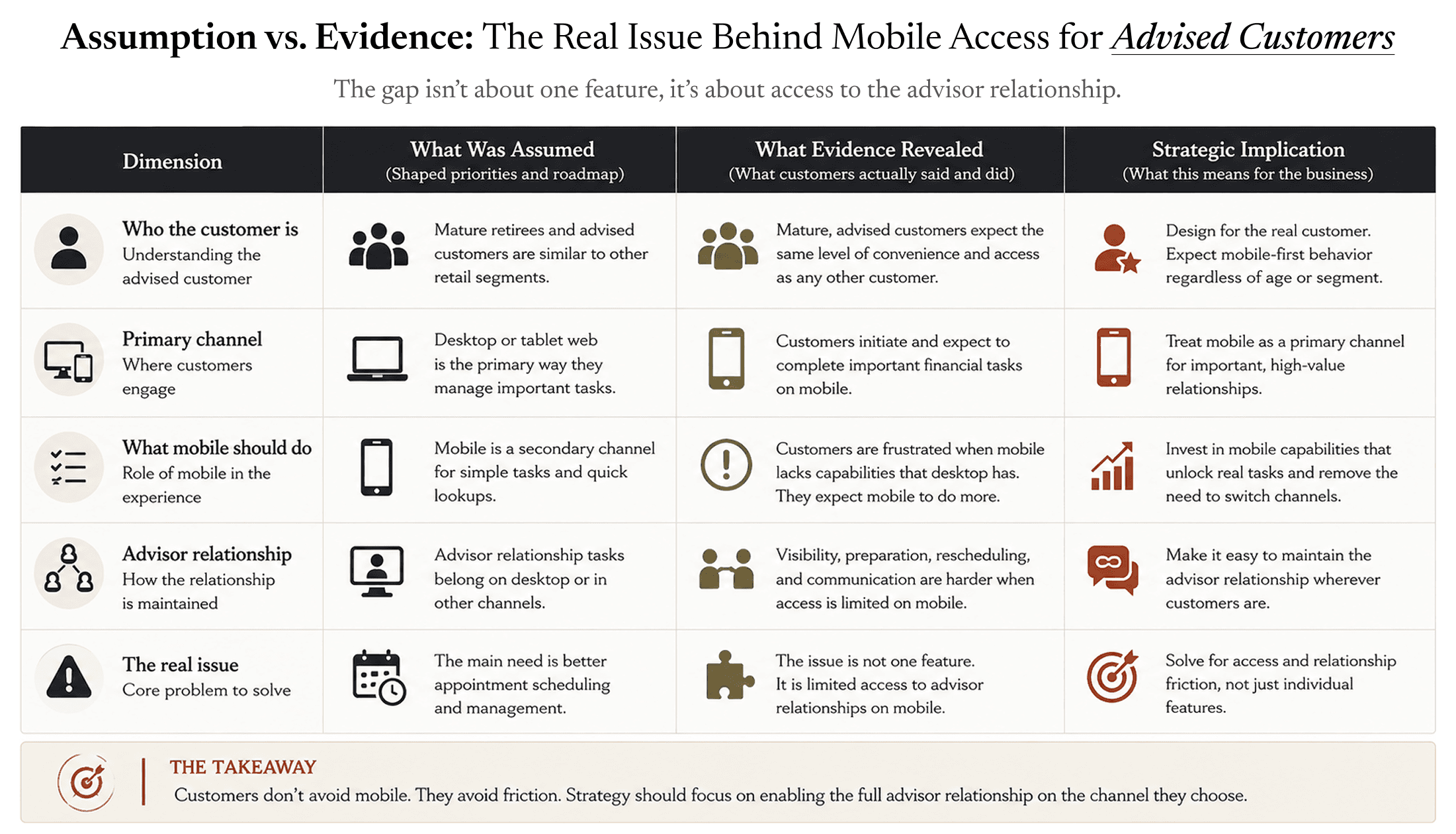
The hidden assumption was that mature retirement and advised customers were primarily desktop or tablet-web users.
Mobile was often treated as secondary for these customers, especially when the task involved retirement accounts, advisor relationships, or premium advice services. That assumption shaped what was prioritized, what was delayed, and what mobile was expected to support.
What the Evidence Revealed
Customer signals challenged that assumption.
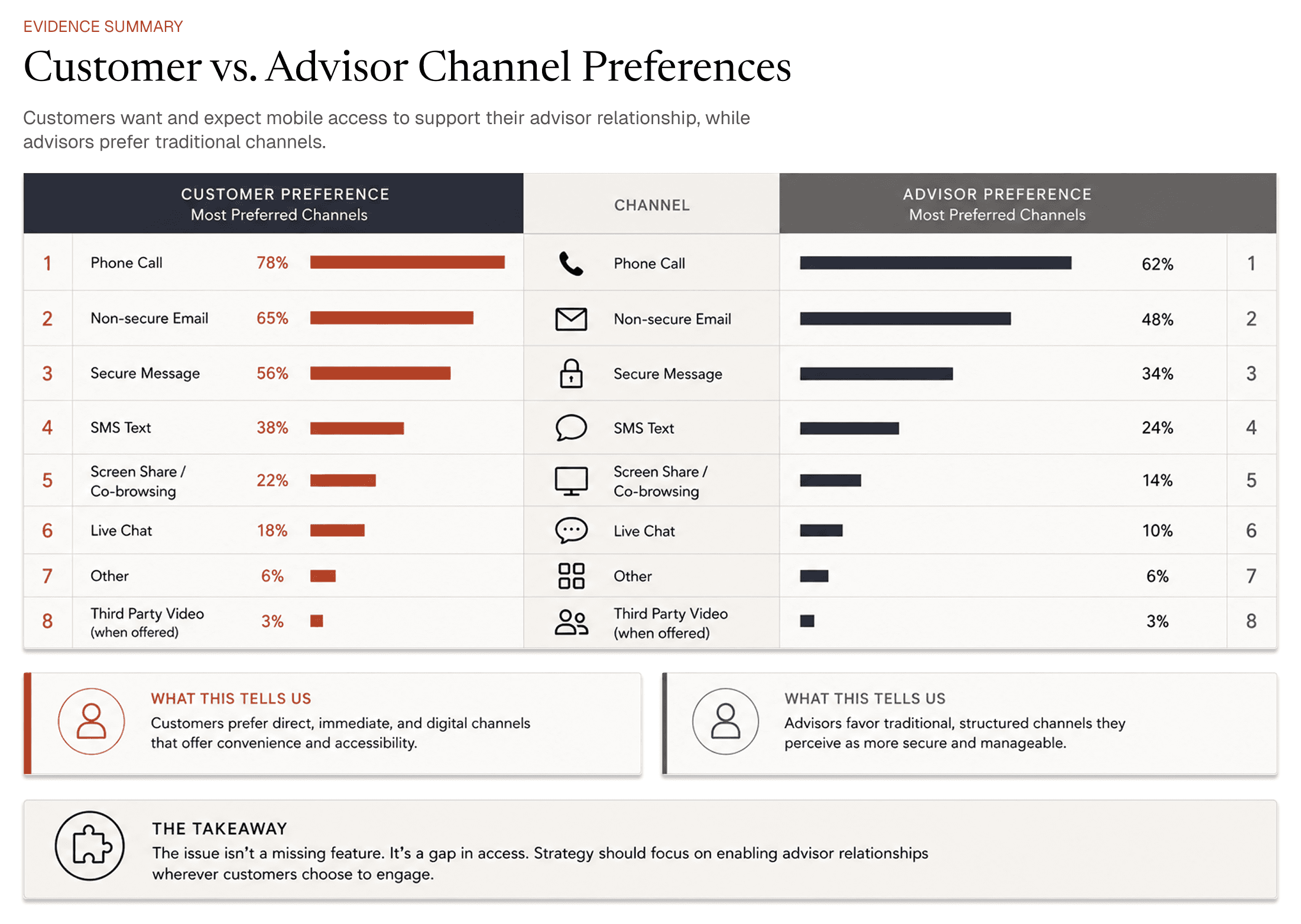
I audited the existing mobile experience, reviewed public app feedback, examined retained customer conversations, and looked for recurring moments when advised customers were forced into desktop or another channel. Customers expressed frustration that important account and service tasks required them to leave mobile. Some compared the mobile experience unfavorably with desktop or web, while others encountered missing functionality or instructions that redirected them elsewhere.
The pattern was not that mature customers avoided mobile. The pattern was that customers expected mobile to support real financial needs, and they were frustrated when the experience did not.
The strategic issue was not only that the organization lacked appointment functionality. It was that mobile access for advised customers was limited by an outdated view of who those customers were and how they engaged with the brand.
Reframing the Problem
Surface problem: How do we improve appointment scheduling?
Reframed problem: How do we support advisor relationships wherever customers choose to engage?
That distinction mattered.
If the team treated the work as scheduling, the solution would focus on reminders, appointment details, and rescheduling paths. Those capabilities were necessary, but they were not enough to explain the business and customer stakes.
The deeper issue was access and relationship friction. Customers could not effectively maintain aspects of their advisor relationship through a mobile channel they regularly used. When appointment visibility, rescheduling, preparation, and advisor context depended too heavily on desktop or disconnected channels, the relationship became harder to sustain.
That reframing moved the work from feature delivery to product strategy.
Strategic Framework: Access → Engage → Complete
I created an Access → Engage → Complete framework to guide prioritization and alignment conversations.
Access: Can customers see and reach advisor services through the channels they regularly use? Access meant recognizing that mobile was not a convenience layer for these customers. It was an important access point that customers expected to support meaningful financial and advisor-service needs.
Engage: Can customers interact with the platform in a meaningful way once they have access? Engagement meant giving customers the ability to navigate, expand, message, reschedule, or take action once they reached their information. If a customer knew they could not make an appointment, the product needed to make rescheduling easier than silence.
Complete: Can customers finish the task they came to complete and receive confirmation that it was done? Completion mattered because customers did not come to the app only to view information. They came to satisfy a need. That might mean completing a transaction, rescheduling an appointment, sending a message, or getting confirmation that an action was finished.
All three layers needed to feel easy, low-friction, and fast. If the experience became too complicated or took too long, customers were more likely to abandon the task or return to another channel. The framework helped move the work away from a narrow feature conversation and toward a relationship-support strategy.
1. Access
See and reach information on the platform of choice.
2. Engage
Navigate, expand, message, reschedule, or take action.
3. Complete Action
Finish the task and receive confirmation.
Aligning the Advice Ecosystem
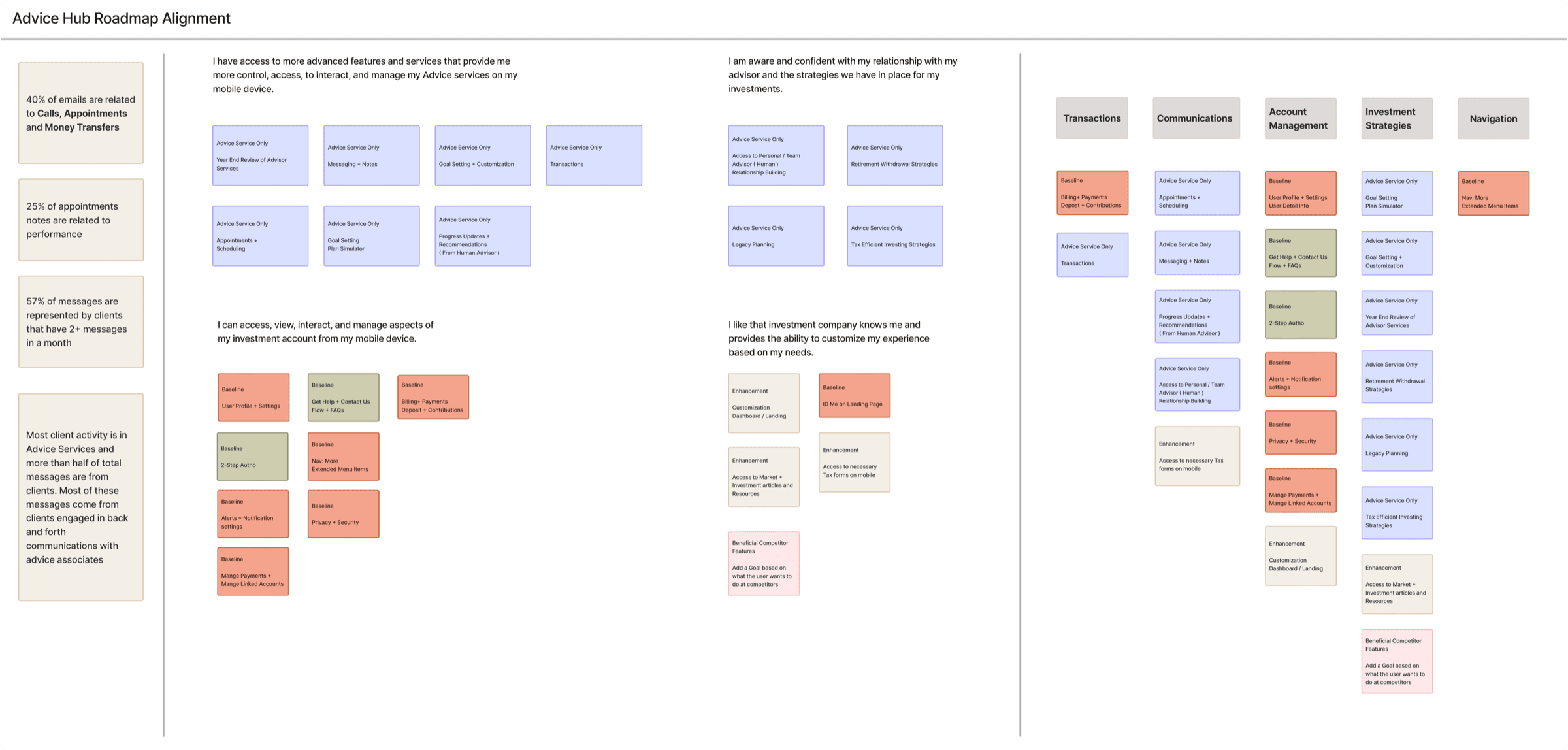
The strategy work required coordination across multiple advice-service verticals, each with its own team, roadmap, priorities, and delivery dependencies.
That structure created a systems challenge. Each team could make reasonable decisions within its own lane while still creating a fragmented customer experience.
My responsibility was not execution inside one team. My responsibility was helping multiple teams move in the same direction while avoiding roadmap conflicts, platform misalignment, and fragmented customer experience. That meant identifying dependencies, surfacing where one team's roadmap could create constraints for another, and helping product managers understand that alignment work was not a design preference.
It was risk-management work tied to customer outcomes, platform readiness, delivery sequencing, and business metrics.
The customer did not experience the organization as separate verticals. They experienced one mobile product. If Personal Advice, Digital Advice, Wealth Management, Ultra-High-Net-Worth Experiences, and related service areas moved independently, the product could reinforce the very fragmentation the work was supposed to solve.
Turning Constraints Into a Phased Strategy
The ideal future state was a native mobile appointment-management experience.
But the organization was working within real platform constraints. API limitations, technical dependencies, resource realities, and companion-product roadmaps affected what could be delivered and when.
The strategic tradeoff was not simply between a perfect native experience and a compromised experience. The real decision was whether to delay customer value until the platform caught up, or deliver a phased solution that could reduce friction sooner while preserving the longer-term native direction.
Customer feedback helped set the order. Seeing an upcoming appointment on mobile mattered, but what advised customers most wanted was the ability to change or schedule an appointment at their own convenience. That level of access was not available to this segment on mobile, and it was the need most closely tied to keeping advisor time from going unused.
To sequence the work, I applied a framework I had developed on earlier projects, which I call the hierarchy of data: presenting information in stages that match what people actually need, rather than everything at once. Working from that structure and the themes in the research, I broke the solution into increments that could be tested with customers and verified at each stage before the next one was built.
The team moved toward a phased strategy.
Phase 1
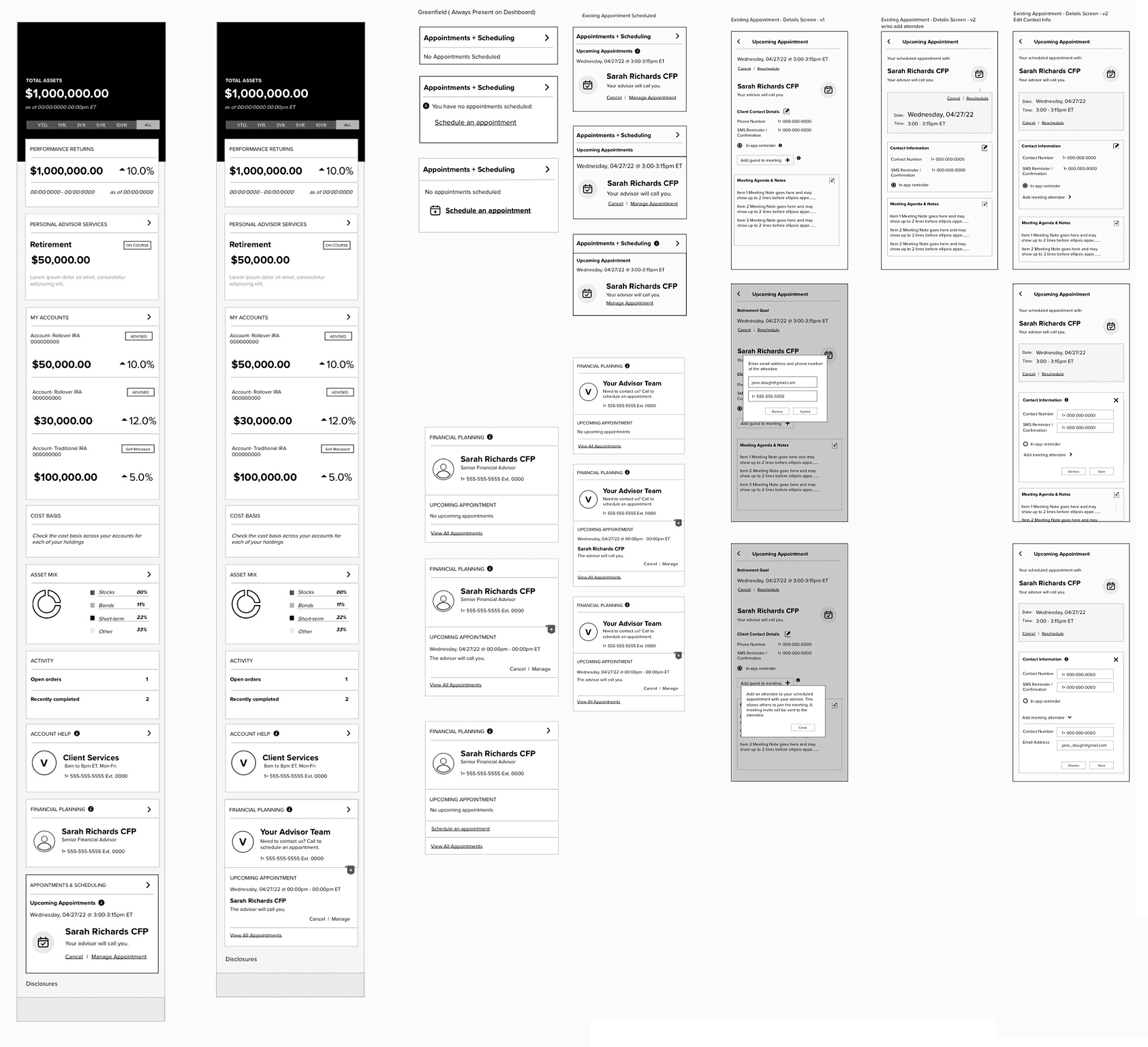
Appointment visibility: made upcoming advisor appointments visible within the mobile experience.
Phase 2
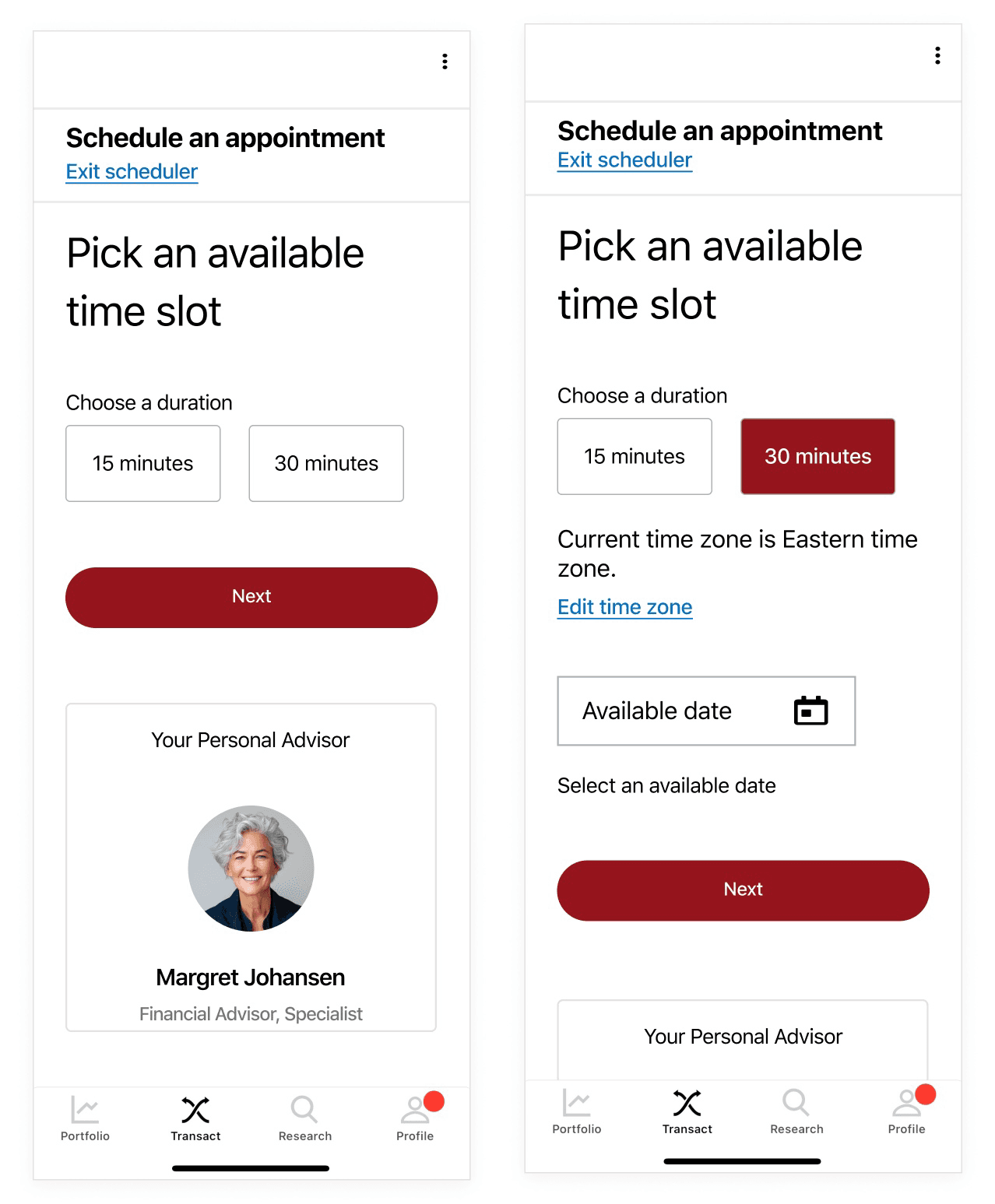
Web-based mobile rescheduling bridge: provided access to rescheduling while native mobile capabilities and dependencies were still developing.
Phase 3
Fuller advisor meeting support: expanded the direction beyond appointment visibility toward broader meeting and relationship support.
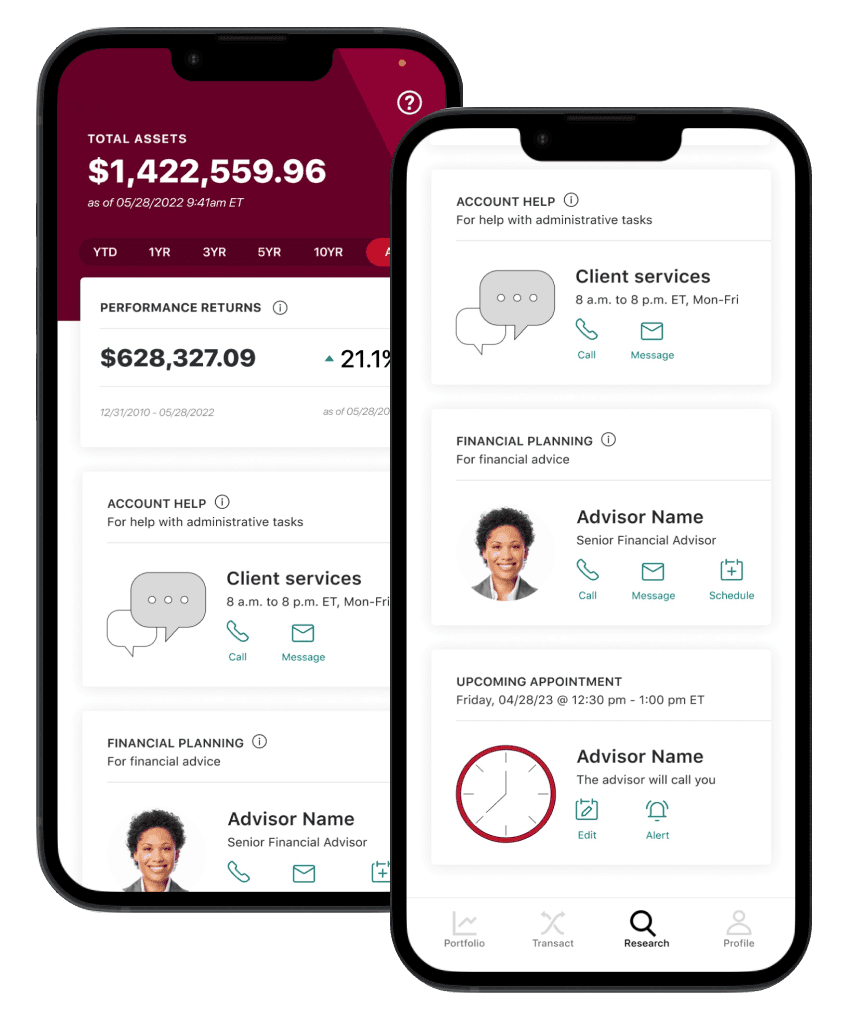
That approach allowed customers to gain meaningful access sooner while giving the organization a path toward deeper native integration over time. Rather than treating technical constraints as dead ends, the phased strategy turned them into inputs for sequencing, prioritization, and roadmap alignment.
The Phase 2 bridge is a good example. Building scheduling natively wasn't possible right away because of roadmap timing and resources. Sending customers out to a browser would have dropped them onto the website and broken the experience. Instead, we embedded only the scheduling section of the web experience inside the app and styled it to match mobile, so customers stayed in the app the whole time. It was the fastest way to bring the feature to market and test its value with customers before committing to a native build.
Retained planning artifacts also show that appointment-related work was being discussed alongside advisor information, account help, appointment cards, appointment messages, and analytics intended to track no-show reduction and satisfaction signals. That matters because the work was not isolated interface cleanup. It sat inside a broader service-access strategy.
This was product strategy work, not simply interface delivery. The direction had to balance customer need, business impact, platform readiness, delivery dependencies, and organizational capacity.
From a Reminder Request to a Mobile Advice Strategy
| Decision | Initial State | My strategic contribution | Resulting direction |
|---|---|---|---|
| Expand beyond a toast notification | Mobile access gaps and customer feedback | Reframed the request around service access and relationship continuity | Appointment visibility became the first phase of a broader mobile strategy |
| Challenge the desktop-first assumption | App reviews, retained customer conversations, and recurring mobile friction | Made the assumption visible and connected it to product prioritization | Mobile became part of the direction for supporting meaningful advisor-service needs |
| Deliver value before full native functionality was available | API limitations, technical dependencies, resource constraints, and companion-product roadmaps | Helped shape a phased approach that balanced immediate access with the longer-term direction | A web-based rescheduling bridge provided an interim path |
| Coordinate multiple advice verticals | Independent roadmaps risked creating customer-facing fragmentation | Identified dependencies and helped teams align around a connected direction | Related capabilities could be sequenced more cohesively |
| Extend the strategy beyond scheduling | Appointment management was part of a broader advisor relationship | Created the Access → Engage → Complete framework to connect individual capabilities to the larger service experience | Broader meeting and relationship support became part of the longer-term direction |
Customer impact: Customers gained better mobile visibility into upcoming advisor appointments and improved access to appointment-related actions, reducing their dependence on desktop or another channel.
Business impact: Retained project notes indicate missed advisor appointments decreased by 35%. That reduction mattered because missed appointments represented more than a failed reminder. They represented lost advisor capacity, additional follow-up work, and increased risk to the continuity of premium customer relationships.
Organizational impact: The work helped challenge the assumption that mature retirement and advised customers were primarily desktop-first users. It also helped establish a broader mobile strategy around access, engagement, task completion, and relationship continuity.
The appointment work became an entry point into a larger strategic question: how should mobile support customers who are not only checking accounts, but also managing financial relationships?
Reflection
This work reinforced that channel strategy cannot be built around demographic assumptions alone. When an organization decides how customers are likely to behave before examining how they are already trying to engage, that assumption begins to shape product priorities and roadmaps.
My role was to make the desktop-first assumption visible, test it against customer signals, and translate what I found into a direction multiple teams could act on. The lesson I carried forward was to investigate the belief underneath a request before committing the organization to the solution built around it.
Review other case studies

Platform & Ecosystem Transformation
Validating a Faster Path for Policy Testing
How mapping the policy lifecycle exposed an operating-model bottleneck and helped cut one testing cycle from about six months to two weeks.

Service & Workflow Transformation
Reframing a Mandated CRM Migration Around How Agents Actually Work
How direct agent research exposed a flaw in the platform strategy and led to a household-centered information model.

Product Experience Modernization
Making Mobile Money Movement Easier to Navigate
How mapping where money came from and where it needed to go shaped what investors see before choosing a transaction.