
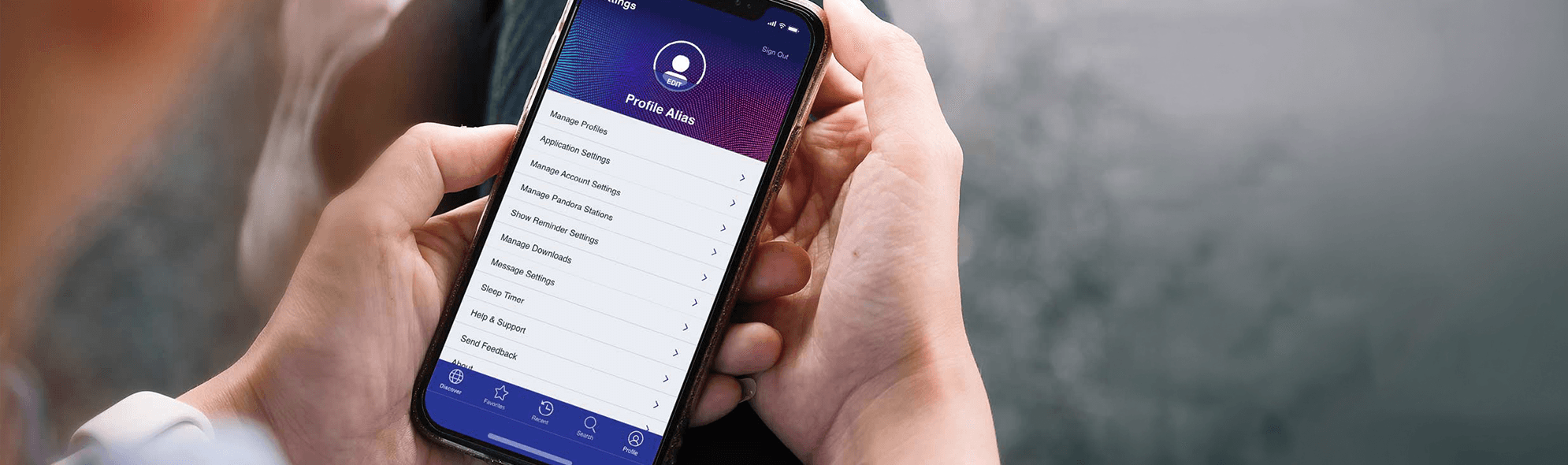
Making Listener Profiles Portable Across Car and App
How I mapped legacy account and subscription systems so a listener profile could follow a household member from the car to the app.
Read Time: Summary 2-3 Min / Deep Dive 3-5 Min
Executive Snapshot
Imagine two people sharing a car with a connected audio service. The subscriber lets another household member set up a listener profile in the car. That person chooses their own display name and avatar, then signs in on their phone. They should be able to recognize and manage the same profile there. What they can play still depends on the subscription access the household has granted and the vehicle or device they're using.
Role
Lead Senior UX Product Designer
Division
Connected audio and streaming service
Timeline
Oct 2019 – Mar 2020
I mapped how legacy account and subscription systems worked across business units, then translated the proposed separation of accounts, profiles, subscriptions, and devices into wireframes and prototypes for the existing mobile and in-car experiences. I considered web in the broader model and focused the detailed design on mobile and in-car. The mobile listener profile work moved into development for an in-car product iteration. Broader identity work depended on account and access decisions across services.
What follows the listener
Account
Ownership and billing
Subscription
Plan and playback access
Listener profile
Name, avatar, and preferences
Vehicle or device
Linked listening endpoint

Deep Dive
To go deep and learn more about my thinking, judgment, and reasoning expressed on this engagement, continue reading and dive deep.
Est. Reading: 3-5 Minutes
A Household Could Share Listening Without Sharing Account Control
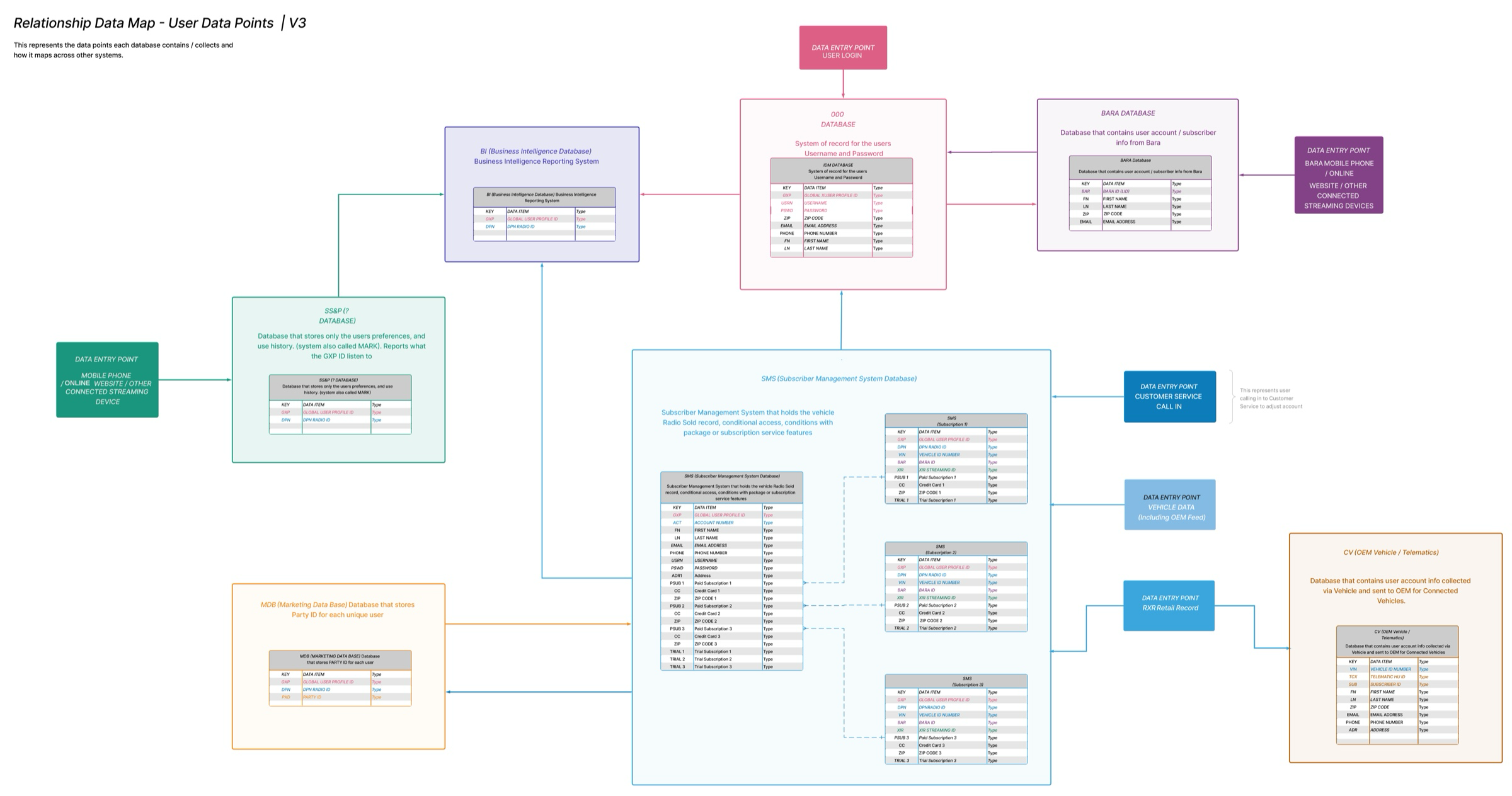
The in-car and streaming services used different rules for who could manage a subscription and who could listen under it. I mapped where those rules differed so a listener could use the same profile in both places while each service continued to apply its access rules.
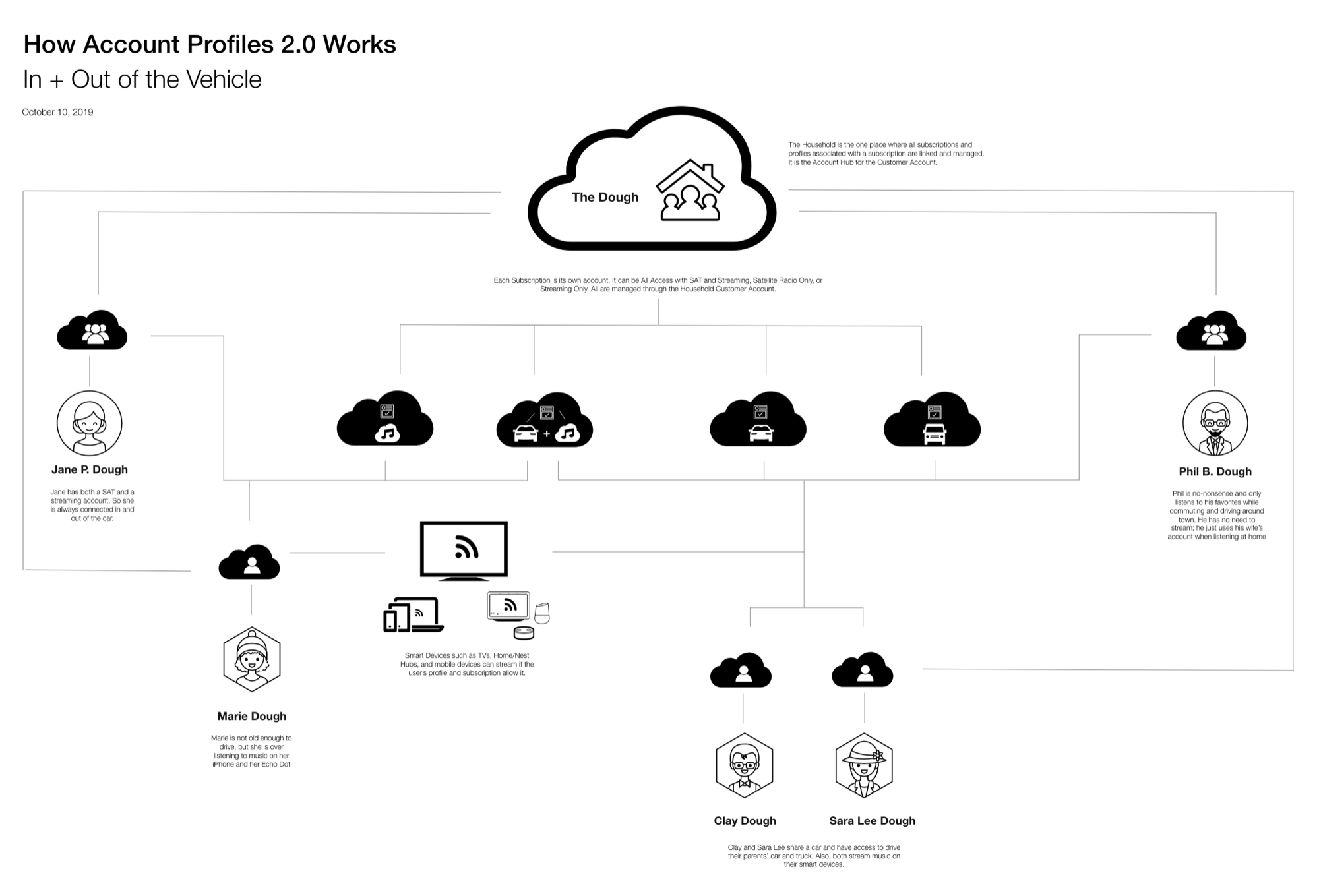
I used scenarios like the shared car to make the distinction concrete. In the scenario above, the secondary listener's profile was linked to the shared vehicle. Their name, avatar, and listening preferences belonged to the profile. Their permission to stream or listen in the car depended on the access granted by the primary subscriber and the relevant link. The scenario set also explored what happened when that household access ended. A former secondary listener could still sign in on mobile and see their profile data, while playback through the former household plan was unavailable. That gave us a concrete way to design for profile continuity and subscription access as separate states.
Continue an In-Car Listener Profile on Mobile
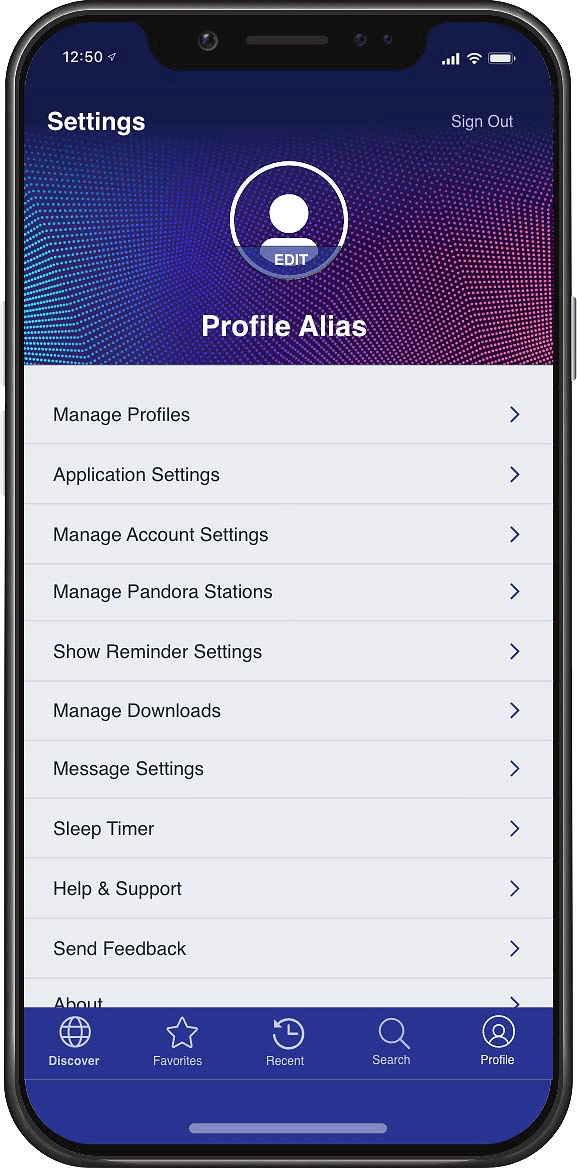
I designed the mobile experience to pick up where the listener had left off in the car. I designed for two states after sign-in. A listener with a profile started in the car could continue setup on the phone. A listener without a profile could start from scratch. For the household member in the opening scenario, this meant picking up the setup they had already begun.
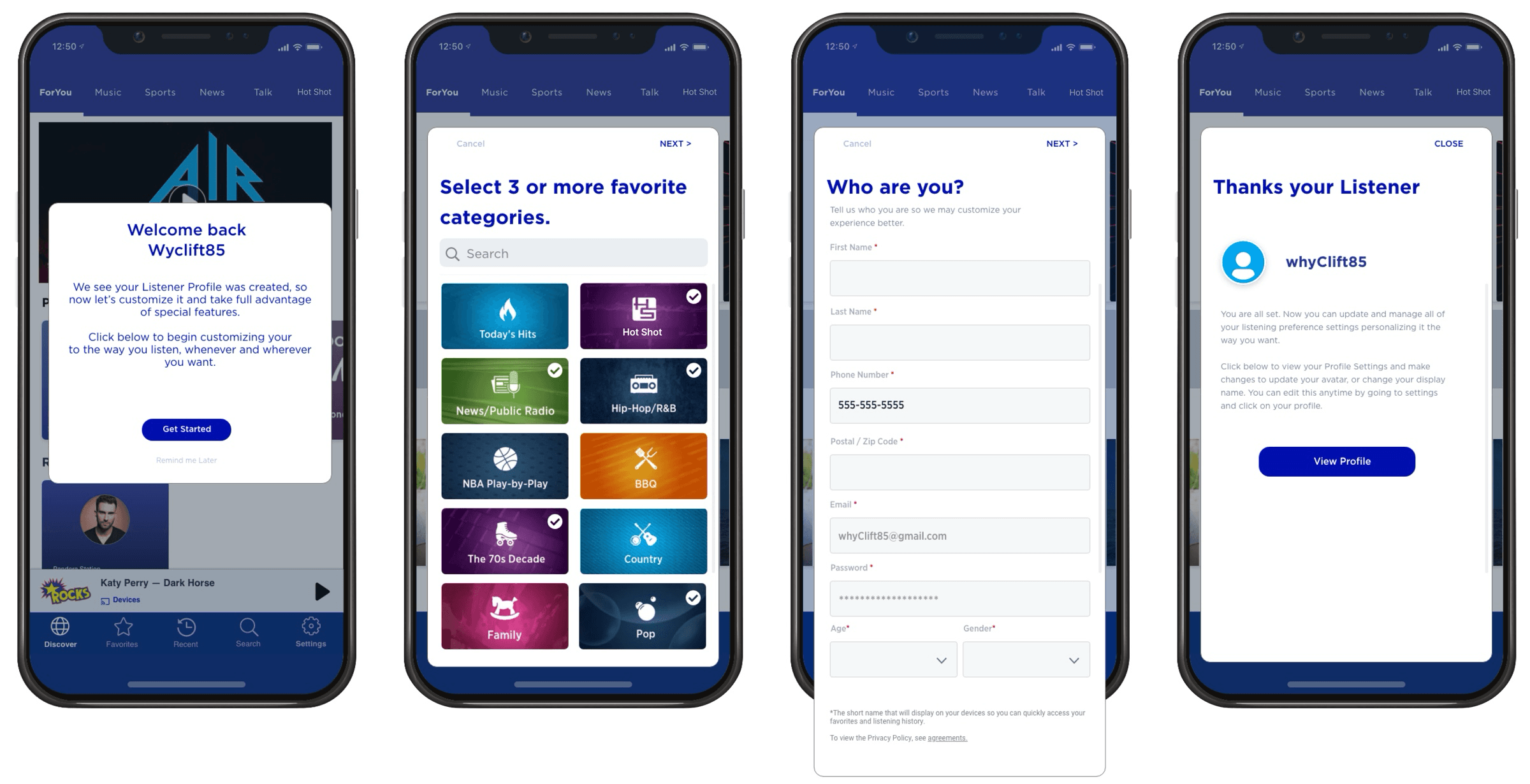
| Screen | What the prototype shows |
|---|---|
| Continue setup | The app recognizes that the listener started a profile in the vehicle and invites them to continue. |
| Choose listening preferences | The listener chooses what they like to listen to. |
| Complete profile details | The listener completes the requested profile details. |
| Confirm setup | The app confirms that profile setup is complete. |
The sequence shows how a listener can carry a profile from the car into the app. The household account still governs ownership, and playback depends on the subscription access available to that listener and the device they're using.
What Moved Into Development and What Depended on Broader Identity Work
| Workstream | Scope and status |
|---|---|
| Profiles | The mobile listener profile work moved into development for an in-car product iteration. The archived prototype illustrates the proposed mobile continuation of an in-car profile. |
| Cross-service identity | The broader effort explored how services would recognize the same person and determine what they could access. That work depended on resolving sign-in, account linking, and how to handle conflicting records across services. |
My role covered systems mapping, experience design, and cross-team coordination. I invited teams affected by the proposed separation of profiles, accounts, and subscriptions to review the model and communicated the planned handoff to the team responsible for longer-term mobile work.
Review other case studies

Platform & Ecosystem Transformation
Validating a Faster Path for Policy Testing
How mapping the policy lifecycle exposed an operating-model bottleneck and helped cut one testing cycle from about six months to two weeks.

Service & Workflow Transformation
Shifting Mobile Advice Strategy from Scheduling to Relationship Support
How challenging a desktop-first assumption shaped a phased mobile strategy and helped reduce missed advisor appointments by 35 percent.

Service & Workflow Transformation
Reframing a Mandated CRM Migration Around How Agents Actually Work
How direct agent research exposed a flaw in the platform strategy and led to a household-centered information model.